
It's 5:30 on a weeknight. The TV's on, the dog's barking, your kid is narrating a dinosaur battle at full volume, and something's boiling over on the stove. Someone asks you a question and you don't hear it. What you hear is everything else, all at once, and you snap.
Then comes the part that hurts more than the snapping: the hot, quiet shame afterward. You love your kid. You'd walk through fire for them. So why does an ordinary Tuesday evening seem to cost you so much more than it costs everyone else?
If you've ever hidden in the bathroom just to hear nothing for two minutes, you're in good company. And here's a thought that might change how you see all of this: maybe you're not bad at motherhood. Maybe you're a very good noticer doing a job with no off switch.
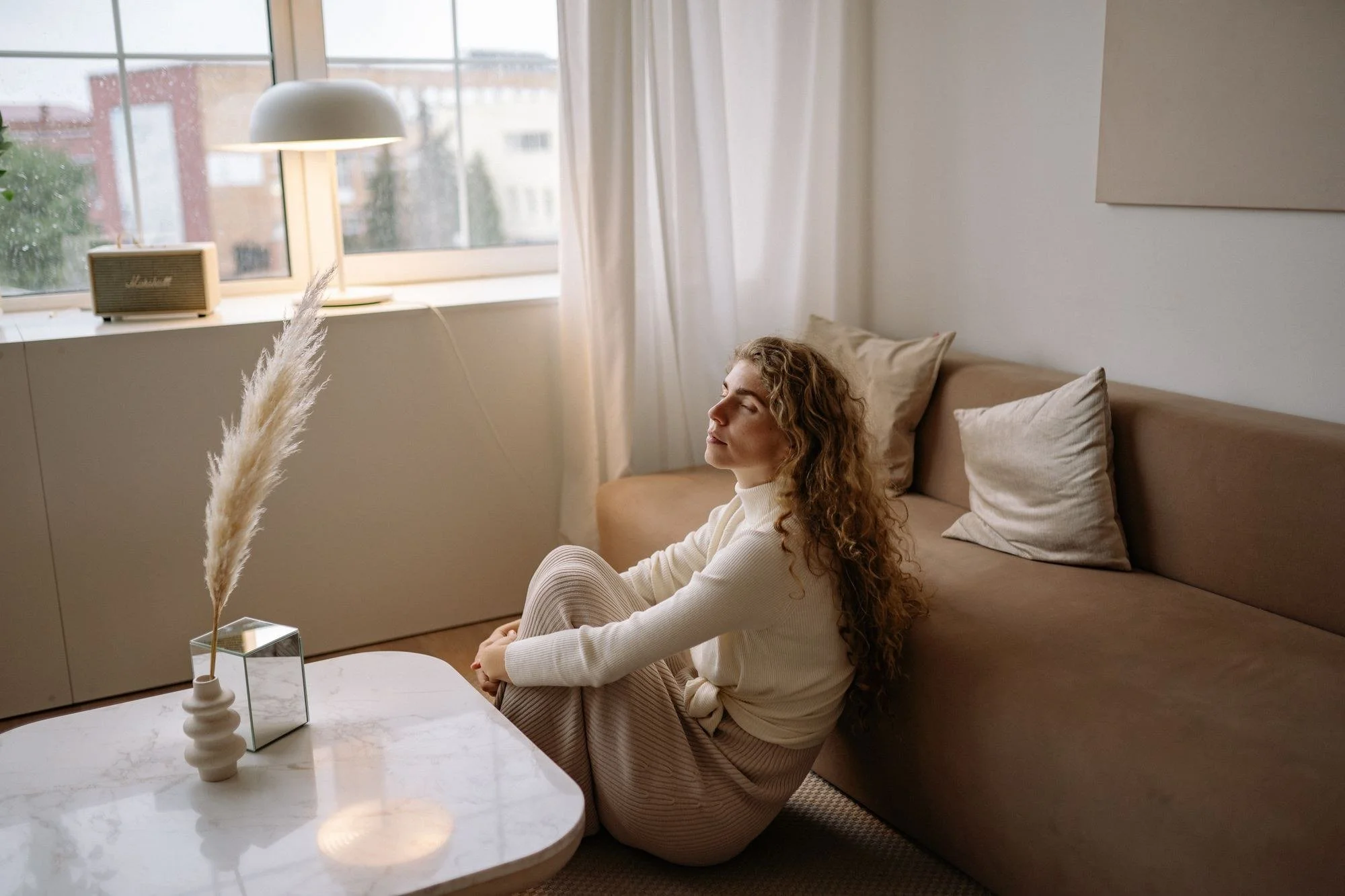
Support for highly sensitive moms feeling overstimulated and overwhelmed
What Is a Highly Sensitive Mom?
A highly sensitive person (HSP) has a nervous system that takes in more detail and processes it more deeply. Researchers call it sensory processing sensitivity, and it shows up in roughly 1 in 5 people. It's a trait, not a disorder.
Think of it as a smoke detector with the dial turned up. It catches the faint smell of toast before anyone else knows it's burning. That's a gift when your toddler's mood is shifting before they have words for it. It's a lot less fun in a house that's cooking every minute of the day.
Motherhood doesn't just add noise. It takes away the quiet your system used to depend on. The detector isn't broken. It just never gets to reset.
Signs You Are a Highly Sensitive Mom
You love your kids and still flinch the fortieth time you hear "Mom" before 9 a.m.
Being touched all day leaves you wanting to crawl out of your own skin (being "touched out").
You feel your child's mood shift in your body before they say a word.
You go from fine to furious in seconds, then replay it all night.
You're wiped by evening on days that "weren't that bad," and you wonder why.
You're quietly missing the version of you who needed less to be okay.
You feel guilty for not enjoying this stage the way you were promised you would.
Your partner gets whatever's left, which feels like almost nothing.
None of this makes you a bad mom. It makes you a tired one, with a nervous system that's been on duty for years without a real break.
Why Motherhood Takes Away What Used to Work
Before kids, you probably managed your sensitivity so smoothly you didn't know you were doing it. The long walk alone. Leaving the loud party early. A calm, orderly home. An hour with a book. You may have thought that was just your personality. It wasn't. It was a system, and a good one.
So many of the moms we sit with say some version of the same thing: "I used to know how to calm myself down. Now I don't even know where to start." If that's you, it isn't because you got worse at this.
Motherhood didn't take away your resilience. It took away the conditions your resilience ran on. You can't leave the room. You can't say no to a toddler. Your body isn't fully your own. So the system that kept you steady for decades goes offline, and nobody hands you a replacement.
Here's the part people rarely say out loud: you might be grieving. Not your child, but the woman who could regulate herself without asking anyone's permission. That loss is real, and it deserves room.
Then the guilt piles on. You can love your child completely and still dread the 4 p.m. stretch. Both can be true. Not enjoying a stage isn't a verdict on your love. It's information about your load.
What Helps in the Moment
When you feel the surge coming, you don't need a perfect technique. You need to take one input off the table.
Subtract before you add. Kill the TV, dim the lights, or step into the hallway for 30 seconds. Lowering one input beats trying to cope with all of them.
Make your exhale longer than your inhale. In for four, out for six. A long exhale nudges your nervous system toward calm.
Say it out loud, kindly. "My brain's full right now. I need a minute." Your kid learns that big feelings are survivable and that needs are allowed.
Dull the edges. Soft earplugs or noise-reducing earbuds take the sharpness off without shutting your kids out.
Find something solid. Press your feet into the floor or hold something cold. It pulls you back into the room.
For more quick tools, see our post on how to cope with overstimulation as a mom.
What Helps Over Time
Quick fixes get you through dinner. Real relief comes from treating your sensitivity as a need you plan for, not a flaw you push through.
Protect recovery time like a medical appointment. Fifteen quiet minutes a day, on the calendar, with someone else covering. It isn't a luxury. It's maintenance.
Shrink your old coping skills instead of abandoning them. The long solo walk becomes ten minutes around the block. The hour of reading becomes one chapter. Smaller still counts.
Turn down the baseline. Fewer toys out, softer lighting, one corner of the house that stays calm and is only yours.
Give your partner information, not a complaint. "Noise drains me faster than it drains you. I need twenty minutes after dinner to reset."
Retire the picture of the effortless mom. The moms who seem to thrive on chaos have different wiring, not better character.
If you've been running on empty for a while, our post on getting out of survival mode goes deeper.
When to Reach Out for Support
It might be time to talk to someone if:
You feel hopeless, or the guilt won't let up.
You're snapping at your kids or partner more often than you'd like.
The exhaustion doesn't lift, even after rest.
You feel like you've lost yourself.
If you ever have thoughts of harming yourself or your child, call your doctor, call 911, or go to your nearest emergency room.
How Therapy Helps Highly Sensitive Moms
Therapy gives you one place where you're not the person holding everything. A therapist who understands sensitivity won't tell you to toughen up or just breathe. Together you'll work on how to:
Make sense of how your sensitivity shapes your days as a mom
Build coping tools that fit the life you actually have now
Quiet the guilt and the harsh voice that keeps score
Put words to what you need, and ask for it
Grieve what changed, and find your footing in what's here
Our therapists work with highly sensitive people and with moms at every stage through our maternal mental health services.
Frequently Asked Questions
Can you become highly sensitive after having a baby?
High sensitivity is usually a lifelong trait. But many women don't notice it until motherhood, when the demands go up and the old ways of coping go away. It can feel brand new even if it's always been there.
Is being a highly sensitive mom the same as postpartum depression?
No. Being highly sensitive is a trait, not a condition. But sensitive moms can be more vulnerable to postpartum anxiety and depression, and the two can overlap. If you're not sure, a therapist can help you sort it out.
Can high sensitivity look like ADHD?
Sometimes. Both can involve feeling overwhelmed by noise and struggling to focus in chaos. They're different, though, and some women have both. A therapist can help you understand what's going on and point you toward an evaluation if it makes sense.
Is it normal to not enjoy motherhood?
Yes. Many loving moms don't enjoy every stage, and feeling that way doesn't make you a bad parent. When you're constantly overstimulated, it's hard to enjoy much of anything. With support, that can change.
You Don't Have to Do This Alone
Being a highly sensitive mom isn't a flaw to fix. You're not too much, and you're not doing this wrong. You're carrying a lot with a nervous system that feels all of it, and you deserve support that makes room for that. We see clients in person in Denver and online across Colorado.
Book a free 20-minute consultation. We'd love to hear what's been hard and help you find what actually helps.